
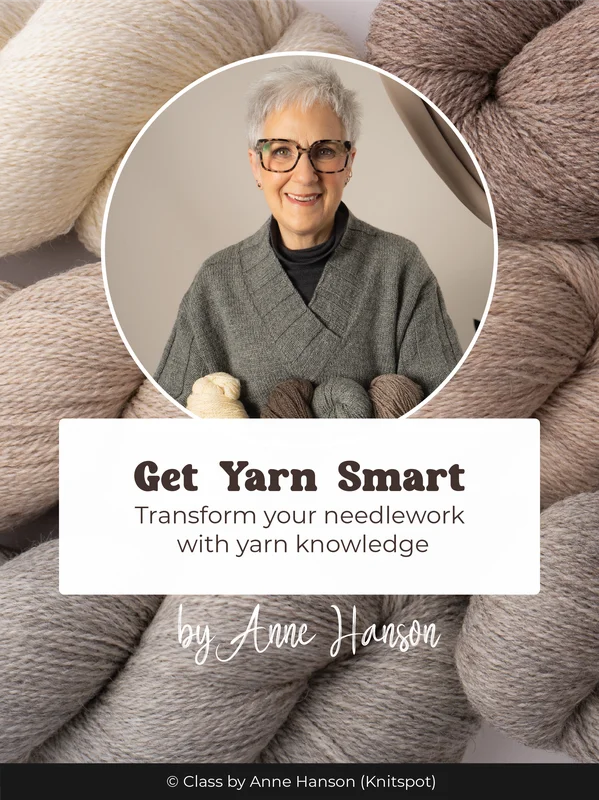
Description
This class explores how a deeper understanding of yarn construction can significantly improve your needlework and fabric outcomes. It focuses on the fundamental role of twist and ply in determining a yarn’s strength, structure, texture, and behavior in finished projects.
Twist is what turns loose fiber into usable yarn, and the amount of twist directly impacts how strong, dense, elastic, or soft a yarn becomes. Higher twist produces firmer, more durable yarns suited for hard-wearing items like socks or mittens, while lower twist creates softer, more relaxed yarns ideal for lace, shawls, and drapey garments. Fiber length, crimp, and desired fabric results all influence how much twist is used in spinning.
The class also explains the differences between single-ply and multi-ply yarns. Single-ply yarns are softer and often more delicate, but can be uneven, fuzzy, and prone to pilling. In contrast, plying—twisting multiple strands together—balances tension, improves stability, and enhances durability. Two-ply yarns create a springy, elastic structure, while multi-ply yarns (three or more strands) produce smoother, more consistent yarn with better stitch definition and strength.
Overall, the piece highlights how yarn construction choices directly affect the final fabric’s appearance, performance, and suitability for different types of knitting or textile projects, helping makers choose yarn more intentionally and effectively.

Reviews
There are no reviews yet.